
- Homepage
- Closure
- Main Stone
- Agate (9)
- Cerrillos Turquoise (8)
- Coral (35)
- Diamond (4)
- Gem Turquoise (3)
- Kingman Turquoise (15)
- Lone Turquoise (9)
- Mother Of Pearl (9)
- Multi-stone (5)
- No Stone (107)
- No Stones (6)
- Onyx (3)
- Opal (5)
- Pearl (4)
- Petrified Wood (29)
- See Description (3)
- Spiny (4)
- Spiny Oyster (3)
- Turquoise (1173)
- Turquoise, Coral (8)
- Other (2138)
- Metal
- Shape
- Theme
- Americana (3)
- Arrow Stamps (2)
- Art (10)
- Art, Beauty (3)
- Art, Beauty, Ethnic (3)
- Beauty (29)
- Birds (17)
- Cluster Rain Drops (3)
- Eagle (3)
- Ethnic (35)
- Ingot Pour (3)
- Native American (7)
- Nature (19)
- Rope Border Stamped (2)
- Southwestern (5)
- Stamped Rain Drops (5)
- Stamped Thunderbird (7)
- Stamps Rain Drops (8)
- Western (13)
- Zuni Maiden (6)
- Other (3397)
- Year
Early ACOMA Polychrome BOWL POT Pottery Hand Made Pueblo Native American
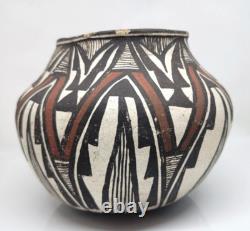
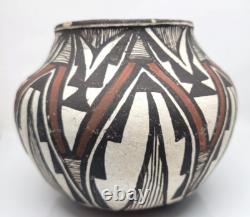
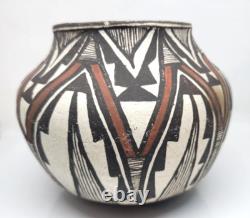
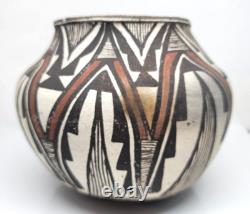
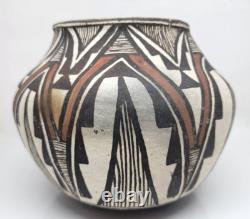
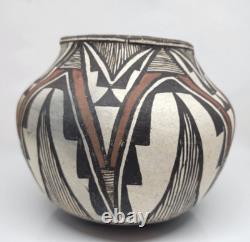
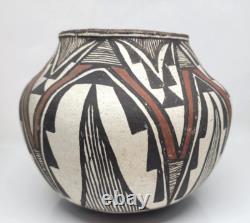
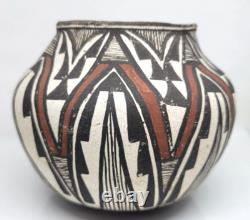
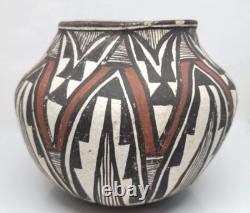
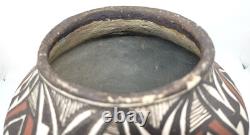
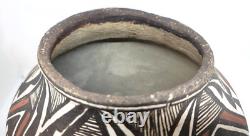
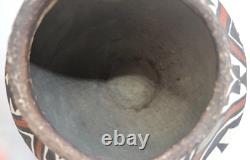
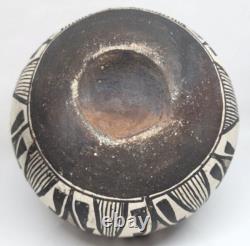
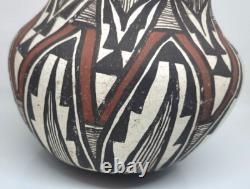


Early Handmade Native American Acoma Bowl / Pot. This piece shows some age. There are some chips at the rim, the finish is worn and has crazed with age and use. Approximately 6.25" High, 7.5" Diameter at the Widest Part, 4 Opening.
I have zero knowledge of this type of pottery. Please ask any questions before purchasing. Acoma artisans would collect clay from certain places on their land, mix it with finely ground shards of old pottery, soak the mix in water, and hand-form vessels with thin yet sturdy walls.After the pieces dried, they would apply a white earth slip made of sandstone dirt strained through cloth, polish the surfaces with smooth stones, and paint designs using a brush made from a yucca plant. The geometric designs often contained fine lines representing rain, and orange bands at the bottom and top of the vessel to symbolize the sun. Because it was believed that the sun rotates around Mother Earth, we have the [orange] above and below.. Please Enlarge Pictures to View.
Coin in pictures is to show size and scale. Ottery & Ceramics may have factory imperfections, glaze skips, glaze pops, kiln marks, etc.These are common and should be expected for many types of pottery. I don't make a point to mention every small factory glitch.