
- Homepage
- Closure
- Department
- Main Stone
- Agate (9)
- Cerrillos Turquoise (8)
- Coral (35)
- Diamond (4)
- Gem Turquoise (3)
- Kingman Turquoise (15)
- Lone Turquoise (9)
- Mother Of Pearl (9)
- Multi-stone (5)
- No Stone (107)
- No Stones (6)
- Onyx (3)
- Opal (5)
- Pearl (4)
- Petrified Wood (29)
- See Description (3)
- Spiny (4)
- Spiny Oyster (3)
- Turquoise (1173)
- Turquoise, Coral (8)
- Other (2137)
- Metal
- Shape
- Vintage
Late 19th (1800's) To Early 20th (1900's) Century Navajo Tribal Necklace
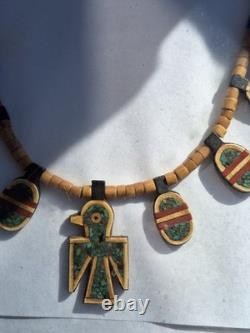
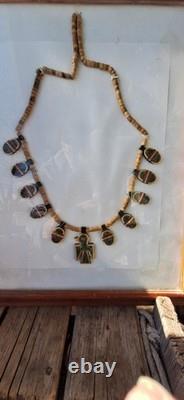
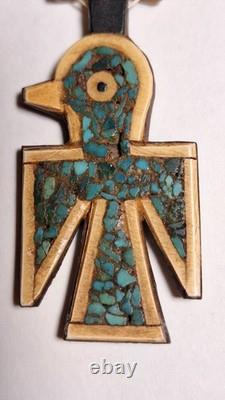
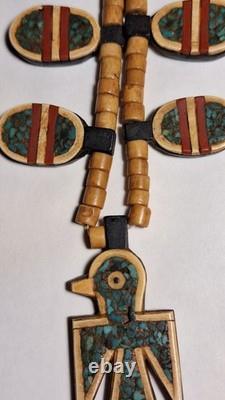
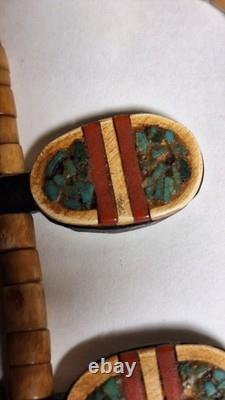
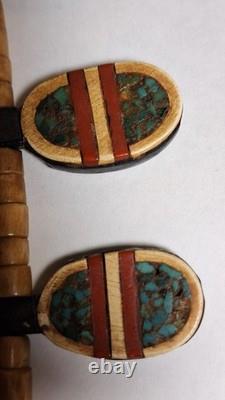
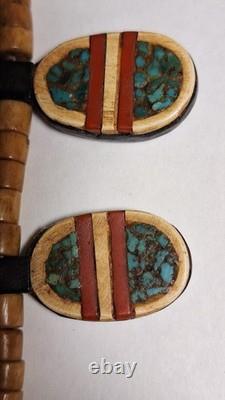


Personal Background of Origin This necklace was obtained by my grandfather in the late 1920's. It was passed on to my mother in the 1960's. I inherited it in the 1990's.
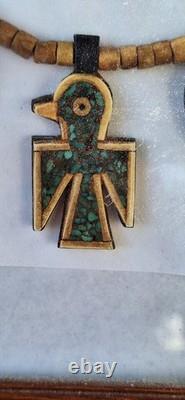
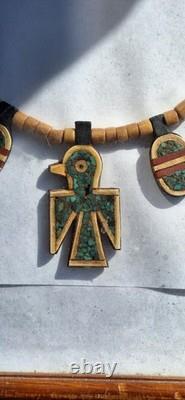
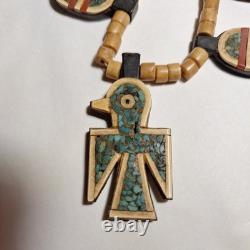
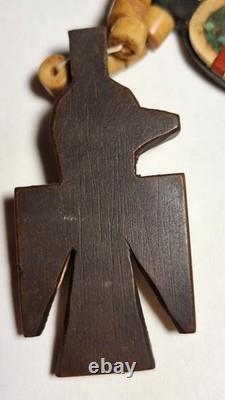
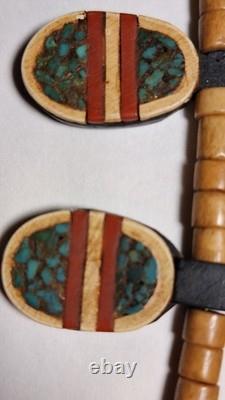
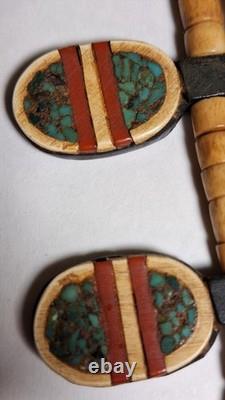
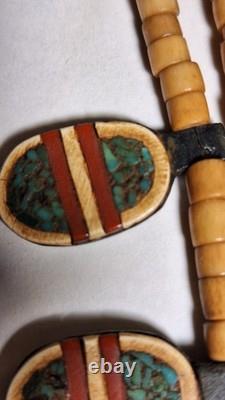
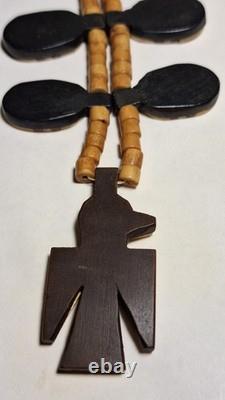
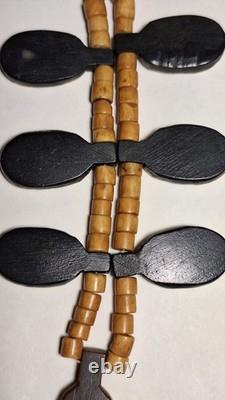
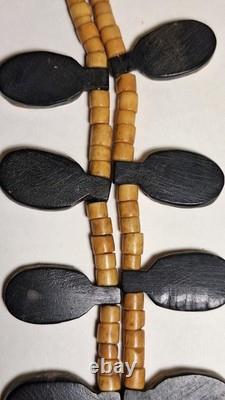
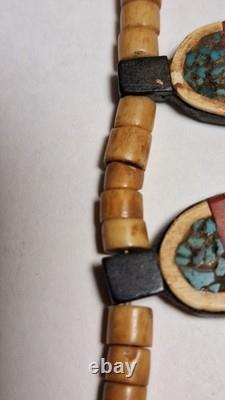
It was restrung in the 1960's by my mother after the original sinew string rotted and broke. She restrung it to its original form. I have never found any other necklace like this. I have done extensive research online and through AI examination. Details about this unique Thunderbird Pendant: The central pendant is a stylized Thunderbird, a symbol used widely across Plains and Southwest tribes.It's particularly common in Navajo and Zuni decorative art and jewelry. Crushed turquoise inlay: The inlay was meticulously placed by hand using a technique where the tribal member arranged small turquoise chips embedding them in a resin or other natural adhesive. This is typical of Zuni stonework. This "chip inlay" was especially popular in Navajo and Zuni jewelry Materials are all fashioned by the artist/tribe member. The wood and bone are hand carved.
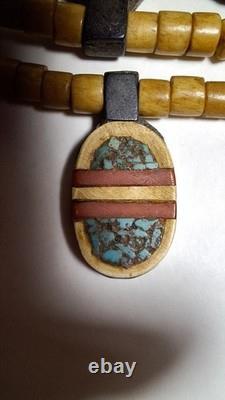
The heishi-style bone beads range from 1/4" wide to as small as 1/16". They vary in size and color. Color range is light tan to dark brown. They are smooth from age.
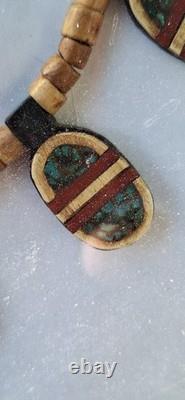
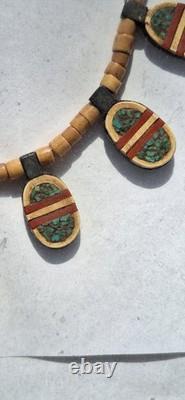
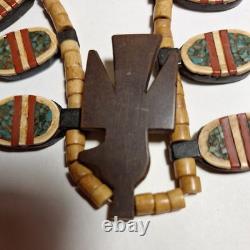
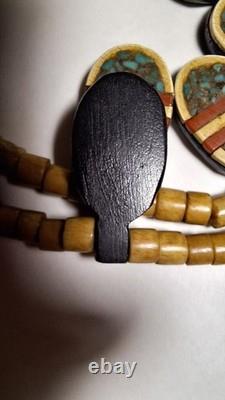
Inlay work on the decorative"paddles" are hand carved turquoise, bone and red coral. The 10 "paddle " shape oval decorative pieces are 1 long.
50 or 1/2 wide The base material for the paddles and Thunderbird are hand hewn carved, wood possibly ironwood. The ebony color is consistent with no fading. This necklace has no silver.
The Thunderbird has one small missing turquoise inlay piece. The other inlay pieces are intact.The Thunderbird is 1.75" long, 1" wide This Thunderbird necklace was made with great skill. This necklace has not been cleaned!
Overall length is 26 There are 132 bone beads This really should be in a museum. It is framed, only taken out to photograph. It is housed in a safe deposit box.